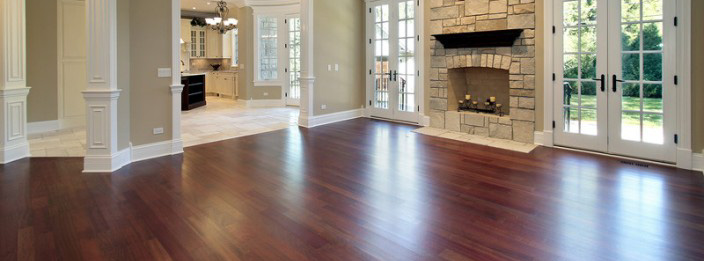

National Floors provides professional hardwood floor refinishing, sanding, staining, repair, and restoration in Castro Valley, California. Hardwood floors in an active household take years of punishment from foot traffic, pets, furniture, children, spills, and everyday use. Eventually, even a quality hardwood floor can begin to look scratched, dull, discolored, or simply worn out.
What homeowners see on the surface, however, does not always tell the whole story. Sometimes the damage is primarily in the protective finish. Other times scratches, stains, dents, or moisture damage extend into the wood itself. Determining the difference is an important part of deciding what the floor actually needs.
Hardwood Floor Refinishing in Castro Valley
Refinishing removes the existing coating and a controlled amount of wood from the surface, creating a clean foundation for a new finish or stain color. When the flooring is structurally sound and has enough usable material remaining, refinishing can restore a floor that has accumulated years of household wear.
- Dust-controlled sanding removes old coatings, surface scratches, discoloration, and traffic wear.
- Hardwood floor repairs can correct damaged or missing boards before the complete floor is refinished.
- Custom staining allows homeowners to retain a traditional wood tone or substantially change the color.
- Professional-grade finishes provide a new protective surface for everyday household use.
- Pre-sanding assessment helps determine whether the floor is suitable for another refinishing.
Learn more about our hardwood floor refinishing and restoration services.
Find out more about our 2 Year Warranty
Are the Scratches in the Finish or in the Wood?
Not every scratch on a hardwood floor represents the same type of damage. Light scratches may affect only the finish, while deeper scratches can penetrate through the protective coating and into the wood.
This distinction matters. When the finish has become worn and scratched but the hardwood beneath it remains sound, refinishing can remove the damaged surface and restore a more uniform appearance. Deeper gouges and dents may improve during sanding but may not disappear completely without removing more wood than is advisable.
A professional assessment considers the depth of the damage as well as the amount of hardwood available to sand. The goal is not to chase every mark until it disappears. The goal is to improve the floor while preserving its long-term integrity.
Hardwood Floors in Homes With Dogs and Pets
Pets can be hard on hardwood floors, particularly in hallways, family rooms, entryways, and areas where dogs repeatedly run, turn, or stop. Claws can leave visible scratches in the finish, while water around bowls and occasional accidents can create additional problems if moisture reaches unprotected wood.
Refinishing can correct much of this accumulated surface wear, but no hardwood finish makes a floor scratch-proof. The finish acts as the protective layer between everyday activity and the wood underneath.
Keeping nails trimmed, using protective pads beneath furniture, cleaning spills promptly, and maintaining the finish before it wears completely through can help extend the life of the floor after refinishing.
Traffic Patterns Can Tell Us a Lot About a Floor
Hardwood rarely wears evenly throughout a home. Hallways, kitchen entrances, family rooms, doorways, and paths between frequently used spaces normally show deterioration before areas beneath furniture or along walls.
A floor may therefore appear reasonably good in one part of the room while the finish has nearly disappeared in another. Dull or gray traffic lanes can indicate that the protective coating has become significantly worn.
Once bare wood is exposed, dirt and moisture can penetrate more easily and discoloration can become more difficult to correct. Refinishing before deterioration progresses too far can prevent relatively ordinary finish wear from becoming deeper wood damage.
Furniture Can Cause More Damage Than Homeowners Expect
Heavy furniture does not need to be moved frequently to affect a hardwood floor. Chairs, tables, sofas, beds, and other furnishings concentrate weight onto relatively small contact points.
Dragging furniture can produce deep scratches, while repeated movement of dining chairs can gradually wear through a finish. Protective felt pads help distribute contact and reduce abrasion, but they should be checked periodically because dirt and grit can become embedded in them.
If furniture damage is primarily at the surface, normal refinishing may correct it. Deep gouges, crushed fibers, or damaged boards require individual evaluation before sanding begins.
Stains and Discoloration Need to Be Evaluated Before Sanding
Some discoloration exists only in an old finish and disappears during sanding. Other stains penetrate directly into the hardwood.
Pet urine, standing water, plant containers, plumbing leaks, and other sources of moisture can create dark areas that extend below the amount of wood that can safely be removed during normal sanding.
Continued sanding is not always the correct solution. If a stain is extremely deep, repairing or replacing affected boards may produce a better result than unnecessarily thinning the surrounding floor.
National Floors provides hardwood floor repairs when localized damage should be corrected before the larger refinishing project.
When Does a Hardwood Floor Actually Need Refinishing?
Visible scratches alone do not always mean that a complete sanding is immediately necessary. The overall condition of the protective finish matters.
When the finish has become extensively worn, traffic areas are dull or discolored, bare wood is becoming exposed, or scratches are widespread throughout the floor, complete refinishing may be the appropriate restoration.
If the coating remains substantially intact and the problem is limited to minor surface wear, a less aggressive maintenance option may sometimes be worth considering. We prefer to inspect the floor before recommending sanding rather than treating every cosmetic problem the same way.
Changing the Color of Castro Valley Hardwood Floors
When complete refinishing is necessary, homeowners also have the opportunity to reconsider the color of the floor. Some prefer to return oak to a natural appearance, while others want to coordinate the flooring with updated cabinetry, paint, furniture, or other remodeling work.
Different hardwood species respond differently to stain. Grain, natural color variation, previous repairs, and replacement boards can also influence the final appearance.
Learn more about our hardwood floor staining and color-change services.
Established Homes and Newer Castro Valley Flooring
Castro Valley includes established neighborhoods as well as newer residential development. Homes around areas such as Upper Castro Valley, Parsons Estates, Palomares Hills, and Five Canyons can contain very different flooring products and construction.
An older home may contain traditional solid hardwood, while newer or remodeled properties may use engineered hardwood. Those floors should not automatically be treated the same way.
Engineered hardwood has a real-wood wear layer over a layered core, and the thickness of that wear layer determines whether sanding is possible. Some engineered floors can be refinished; others should not be aggressively sanded. Identifying the flooring construction is therefore part of our assessment before work begins.
Hardwood Stair Refinishing and Installation
Stair treads often reveal household wear sooner than surrounding floors because traffic is concentrated in the same locations every day. Scratches, worn finish, and discoloration can become especially noticeable along the center of each tread.
Existing hardwood stairs can often be sanded, stained, and refinished along with adjoining floors. National Floors also provides hardwood stair installation when new stair components are needed.

Why Castro Valley Homeowners Choose National Floors
National Floors is a California C-15 licensed flooring contractor, license #903508. Hardwood sanding, staining, refinishing, restoration, and repair make up the majority of our work, and our crews complete more than 100 hardwood floor refinishing projects in a typical year.
Experience matters because two scratched floors can require completely different recommendations. One may simply have a badly worn coating. Another may have deep damage, previous sanding, insufficient remaining material, or an engineered wear layer that limits what can safely be removed.
We use professional sanding equipment and professional-grade finish systems. National Floors requires no labor deposit, and our one-project-at-a-time approach means that once your project begins, our focus remains on completing it.
Free Hardwood Floor Refinishing Estimates in Castro Valley
If your Castro Valley hardwood floors are scratched, dull, stained, or showing years of family and pet traffic, we provide free in-home assessments to determine what they actually need.
We can inspect the flooring, distinguish finish wear from deeper wood damage, identify necessary repairs, evaluate whether another sanding is appropriate, and discuss stain and finish options.
Call National Floors at (408) 309-1880 or schedule your Castro Valley hardwood floor consultation.
Castro Valley Areas We Serve
Upper Castro Valley, Parsons Estates, Palomares Hills, Five Canyons, Columbia, Castro Valley Hills, and surrounding Castro Valley neighborhoods.
Castro Valley ZIP codes: 94546, 94552
