
For Bay Area homeowners, this is not simply a matter of choosing the product with the lowest VOC number on the label. The finish also needs to be appropriate for the floor, site conditions and expected level of wear. Product quality, preparation and application all contribute to how well the finished floor performs.
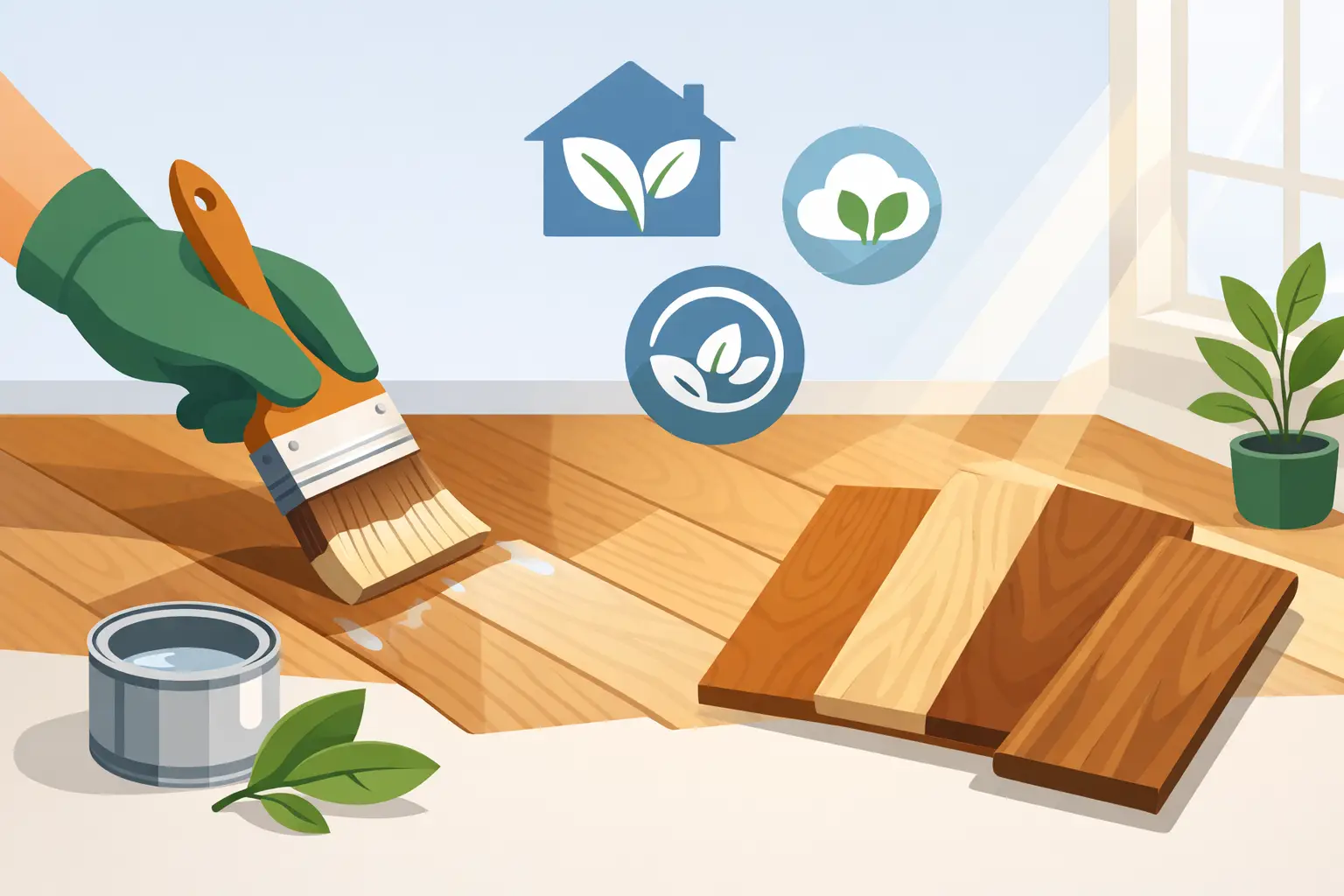
What Low VOC Actually Means for Hardwood Floors
VOC stands for volatile organic compounds. These compounds can be released into the air as certain coatings dry and cure. The amount and type of VOC emissions vary considerably between hardwood floor finish systems.
Low VOC does not necessarily mean odor-free, chemical-free or immediately ready for normal occupancy. Odor and VOC content are related issues, but they are not the same measurement. Any hardwood floor finish should be used according to the manufacturer's application, ventilation, drying and curing requirements.
The complete finishing system also matters. Stains, sealers, finish coats and other products used during the refinishing process should be compatible with one another. Selecting products designed to work together is preferable to combining unrelated products based only on the VOC number shown on individual labels.
Water-Based Low VOC Hardwood Floor Finish Options
Modern water-based polyurethane systems are commonly chosen when homeowners want relatively low odor, reduced VOC emissions, faster drying and a finish that adds very little amber color to the wood. Professional-grade water-based finishes are available in several sheen levels and can provide excellent protection against normal residential wear.
A clear water-based finish can preserve the natural appearance of white oak, maple and other lighter woods. It is particularly useful when the goal is a contemporary or natural appearance rather than the warmer amber tone traditionally associated with oil-based polyurethane.
Professional water-based finishes are available in different formulations and performance levels. Some are designed primarily for normal residential use, while others are formulated for more demanding traffic conditions. Product selection should therefore be based on how the floor will actually be used rather than assuming that every water-based finish provides the same performance.
Two-component water-based finishes are also available. These systems use a separate hardener or catalyst and can provide excellent durability for demanding residential and commercial applications. They require careful mixing and application according to the manufacturer's specifications and are generally intended for professional use.
Traditional oil-based polyurethane remains another proven hardwood floor finish. It produces a warmer amber appearance and has been used successfully on hardwood flooring for decades. However, it generally has a stronger odor, higher VOC content and longer drying time than many modern water-based systems.
For homeowners specifically concerned about VOC emissions, odor and project turnaround, a professional-grade water-based system will often be the more appropriate choice. When the traditional amber appearance of oil-based polyurethane is desired, those characteristics need to be weighed against the longer drying time and different application environment.
The Finish Is Only as Good as the Preparation
A premium low VOC finish cannot hide deep scratches, pet stains, black water marks, loose boards or an uneven previous coating. In many cases, applying a clear finish can actually make defects more apparent. Proper refinishing begins with evaluating the condition, construction and previous treatment of the floor.
Solid hardwood can often be sanded and refinished multiple times during its life, provided enough usable wood remains above the tongue-and-groove joint. Engineered hardwood requires more caution because the thickness of its real hardwood wear layer varies significantly between products.
Some engineered flooring contains enough usable hardwood to be professionally sanded and refinished. Other engineered products have a much thinner wear layer and may be candidates only for a screen and recoat, localized repair or replacement. The available wear layer should be determined before aggressive sanding begins.
Dust-containment sanding equipment can dramatically reduce the amount of airborne wood dust produced during refinishing. Just as importantly, proper sanding removes the old finish and surface damage consistently while keeping the floor flat and preserving as much usable hardwood as possible.
Staining requires equally careful preparation. Oak generally accepts stain well, while natural grain variation, previous repairs and sun exposure can still affect the final appearance. Sample areas are useful before committing to a new hardwood floor stain, particularly when making a substantial color change.
When the homeowner wants to retain the natural appearance of freshly sanded wood, a clear water-based finish can be particularly effective because it generally introduces much less amber coloration than traditional oil-based polyurethane.
Durability, Sheen and Everyday Maintenance
The best finish is not necessarily the glossiest finish. Higher-gloss coatings reflect more light, but that reflection also makes dust, footprints, scratches and minor imperfections easier to see.
Satin is a popular choice for residential hardwood because it provides noticeable depth and reflection without highlighting every small mark. Matte and lower-sheen finishes provide a more understated appearance and can make normal surface wear less noticeable.
Sheen should primarily be considered an appearance decision. A lower sheen does not eliminate scratching or reduce the need for proper maintenance.
Durability depends on the finish system, proper film build, preparation and correct application. Applying additional coats beyond the manufacturer's specifications does not automatically produce a better floor. Improper coat thickness or applying another coat before the previous one is ready can interfere with curing and adhesion.
Temperature, ventilation and humidity also affect application and drying. Professional finish systems specify acceptable conditions and recoating times for a reason, and those requirements should be followed throughout the project.
Once the floor returns to service, simple habits help protect it. Use felt pads beneath furniture, place appropriate mats at exterior doors, clean spills promptly and avoid excessive water or harsh cleaning products on hardwood floors. Sand and grit tracked indoors can act like abrasive material under shoes and furniture regardless of how durable the finish is.
Even a high-quality low VOC finish will eventually show normal wear. If the finish remains intact, a screen and recoat may restore protection before traffic wears completely through the finish and exposes bare wood. Once significant areas of bare wood are exposed, complete sanding and refinishing may become necessary.
Curing Time Matters as Much as Drying Time
One of the most important distinctions with hardwood floor finishes is the difference between drying and curing. A finish can feel dry to the touch long before it has reached its final hardness.
Drying allows the floor to reach the point where limited activity may be permitted according to the finish manufacturer's instructions. Curing is the longer process during which the coating continues developing its final physical properties.
During this period, furniture, rugs, cleaning and normal household use should follow the specific recommendations for the finish system that was applied. Heavy objects should never be dragged across a newly finished floor, even when the surface feels dry.
Water-based finishes generally allow a faster return to light foot traffic than traditional oil-based polyurethane, but exact times vary by product, number of coats, temperature, humidity and ventilation. The manufacturer's specifications for the particular finish are more reliable than a universal rule about how many hours or days a floor needs.
This is particularly important for homeowners, landlords or sellers working toward a deadline. The project schedule should include adequate time for sanding, staining when applicable, finish application and the required drying and curing periods rather than planning around the earliest moment the floor feels dry.
Low VOC Does Not Solve Moisture Problems
A low VOC finish protects the surface of hardwood; it does not make the floor waterproof and cannot correct moisture entering from underneath the flooring.
Moisture from a concrete slab, damp crawlspace, plumbing leak, appliance or exterior water intrusion can cause boards to expand, cup, stain or loosen regardless of the finish applied to the surface. Active moisture problems should be identified and corrected before refinishing begins.
The same principle applies to loose flooring, termite damage, severely damaged boards and contamination from previous coatings or maintenance products. Those conditions need to be addressed before selecting the final finish system.
Choosing the Right Low VOC Finish
For homeowners specifically seeking lower VOC emissions, modern professional-grade water-based polyurethane provides an excellent combination of durability, relatively fast drying and minimal added amber coloration. It is available in several performance levels and sheen options, allowing the finish to be matched to both the appearance of the floor and the demands placed on it.
The lowest VOC number alone, however, should not determine the decision. A hardwood floor finish still needs to be compatible with the wood, stain or sealer beneath it and the expected use of the room. Proper sanding, application and curing remain essential regardless of the product selected.
National Floors specializes in hardwood floor sanding, staining, refinishing and repair throughout the Bay Area. When indoor air concerns, project turnaround and long-term durability are priorities, the existing flooring can be evaluated and an appropriate low VOC finish system selected for the condition of the floor and the way the home is used.
```
