
Professional hardwood floor refinishing can restore the appearance of these floors while preserving the original material and character of the home. However, older flooring should be carefully inspected before sanding begins because previous alterations, repairs, moisture exposure, and decades of wear can affect the refinishing process.
Older Oakland Hardwood Floors May Still Have Considerable Life
A hardwood floor can look badly worn without being beyond repair. Dull finish, surface scratches, faded stain, and dark traffic patterns may primarily affect the upper surface.
If enough usable wood remains, sanding can remove the worn finish and expose a cleaner layer below. Necessary board repairs can then be completed before the floor receives its new stain and protective finish.
Older floors may have already been refinished one or more times. Before beginning another refinishing project, the remaining floor thickness should be checked. Excessive sanding can weaken the boards or expose the tongue-and-groove system.
What Types of Hardwood Flooring Are Found in Oakland Homes?
Oak flooring is common in many Bay Area homes, but Oakland properties may also contain maple, fir, pine, parquet, engineered wood, or flooring added during later remodels.
Some homes contain more than one type of wood. An original room may meet an addition, repaired section, hallway, or remodeled kitchen with different flooring characteristics.
Identifying the wood species, board dimensions, construction, and previous finish helps determine:
- Whether the floor can be sanded
- How repairs should be completed
- How the wood may accept stain
- Which finish system may be appropriate
- Whether older and newer sections can be blended successfully
Check for Repairs Before Refinishing
Refinishing improves the surface, but it does not correct every underlying problem. The floor should be inspected for repair needs before sanding begins.
Common concerns include:
- Loose or damaged boards
- Water staining
- Pet stains
- Gaps
- Cracked flooring
- Missing sections
- Poorly matched previous repairs
- Flooring removed during remodeling
- Damage near doors, appliances, or plumbing fixtures
- Termite or insect damage
When repairs are completed before the final sanding, replacement boards can be leveled and finished with the surrounding flooring.
Moisture Damage Should Be Addressed First
Leaks from plumbing, roofs, appliances, doors, windows, or crawl spaces can affect hardwood flooring. In some Oakland homes, moisture may also enter from below because of subfloor, foundation, drainage, or ventilation conditions.
Refinishing should not begin until an active moisture source has been identified and corrected. Otherwise, newly repaired or refinished flooring may cup, stain, loosen, or buckle again.
Depending on the circumstances, moisture readings and additional drying time may be needed before the permanent condition of the floor can be evaluated.
Can Hardwood Floors Be Refinished After Carpet Removal?
Many Oakland homeowners discover hardwood flooring after removing wall-to-wall carpet. The wood may be covered with carpet padding residue, staples, tack strips, paint, adhesive, stains, or uneven discoloration.
These floors can often be restored, but the result depends on their condition. Removing carpet does not guarantee that the flooring beneath it is undamaged.
Before refinishing, the contractor should look for:
- Deep staple and tack-strip damage
- Pet stains
- Moisture damage
- Missing boards
- Plywood patches
- Paint or adhesive contamination
- Previous sanding
- Inconsistent flooring between rooms
A professional inspection provides a more realistic understanding of what can be improved and what may require repair.
Choosing a Stain Color
Refinishing gives homeowners the opportunity to maintain the natural appearance of the wood or choose a different stain color.
Stain can change the overall character of a room, but results vary according to wood species, grain, age, sanding, and natural color differences. The same stain may look different on red oak, white oak, maple, fir, or replacement boards.
Samples should be viewed on the actual floor whenever practical. Lighting should also be considered because natural daylight and indoor lighting can make a stain appear lighter, darker, warmer, or cooler.
Very dark stains may emphasize dust, pet hair, scratches, and natural differences between boards. Natural and medium colors often reveal more of the wood grain and may be easier to maintain visually.
Water-Based and Oil-Based Finishes
The choice between finish systems may depend on the desired appearance, available project time, odor concerns, durability expectations, and maintenance preferences.
Water-based finishes generally dry more quickly and tend to preserve a lighter, more natural wood color. Oil-based finishes typically create a warmer or more amber appearance and require longer drying times.
There is no single finish that is best for every Oakland home. The selection should consider household activity, pets, children, sunlight, floor condition, and the homeowner’s desired appearance.
How Long Does Refinishing Take?
Most projects require multiple days for preparation, sanding, repairs, staining when selected, finish application, and drying.
The schedule depends on:
- Square footage
- Number of rooms
- Floor condition
- Repair requirements
- Stain selection
- Finish system
- Number of coats
- Temperature and humidity
- Access to the work area
Homeowners should also plan for the period after the final coat. Light foot traffic may be allowed before the finish has fully cured, but furniture, rugs, pets, and normal household use may need to be restricted for a longer period.
Plan for Access, Furniture, and Daily Living
Before work begins, furniture and personal items must be removed from the refinishing area. Homeowners should also consider how the project will affect access to bedrooms, kitchens, hallways, entrances, and stairs.
Depending on the layout, remaining in the home may be inconvenient or impractical. Pets should be kept away from sanding equipment, open doors, wet finishes, and curing floors.
Discussing access and scheduling in advance helps prevent confusion after the work has begun.
Avoid Choosing a Contractor Based Only on Price
Hardwood floor refinishing is a skilled trade. The final appearance depends on equipment, sanding technique, repair experience, floor preparation, stain application, finish application, and jobsite conditions.
Before selecting a contractor, Oakland homeowners should consider:
- California contractor licensing
- Insurance
- Refinishing and repair experience
- Dust-containment equipment
- Knowledge of older flooring
- Written scope of work
- Finish options
- Project schedule
- Drying and curing instructions
- References or completed work
An unusually low proposal may exclude necessary repairs, preparation, finish coats, or other important parts of the project. Homeowners should compare the complete scope rather than only the final price.
Professional Hardwood Floor Refinishing in Oakland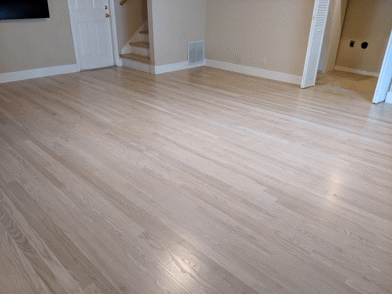
Refinishing can preserve original hardwood flooring, improve the appearance of an Oakland home, and extend the life of the existing wood. The strongest results begin with an honest inspection and a plan that accounts for repairs, moisture, stain selection, and the flooring’s remaining thickness.
National Floors provides hardwood floor refinishing, staining, and repair services in Oakland and throughout the surrounding Bay Area. We evaluate each floor individually and recommend an approach based on its construction, condition, and the homeowner’s goals.
Contact National Floors to arrange an evaluation and learn whether your Oakland hardwood floors are good candidates for repair and refinishing.
