
For many homeowners, refinishing costs less, creates less waste and produces a more convincing result than covering a real timber floor with new material. The key is knowing whether the floor has enough wood to sand, what damage sits below the finish and which coating will stand up to daily life.
When hardwood floor refinishing is the right answer
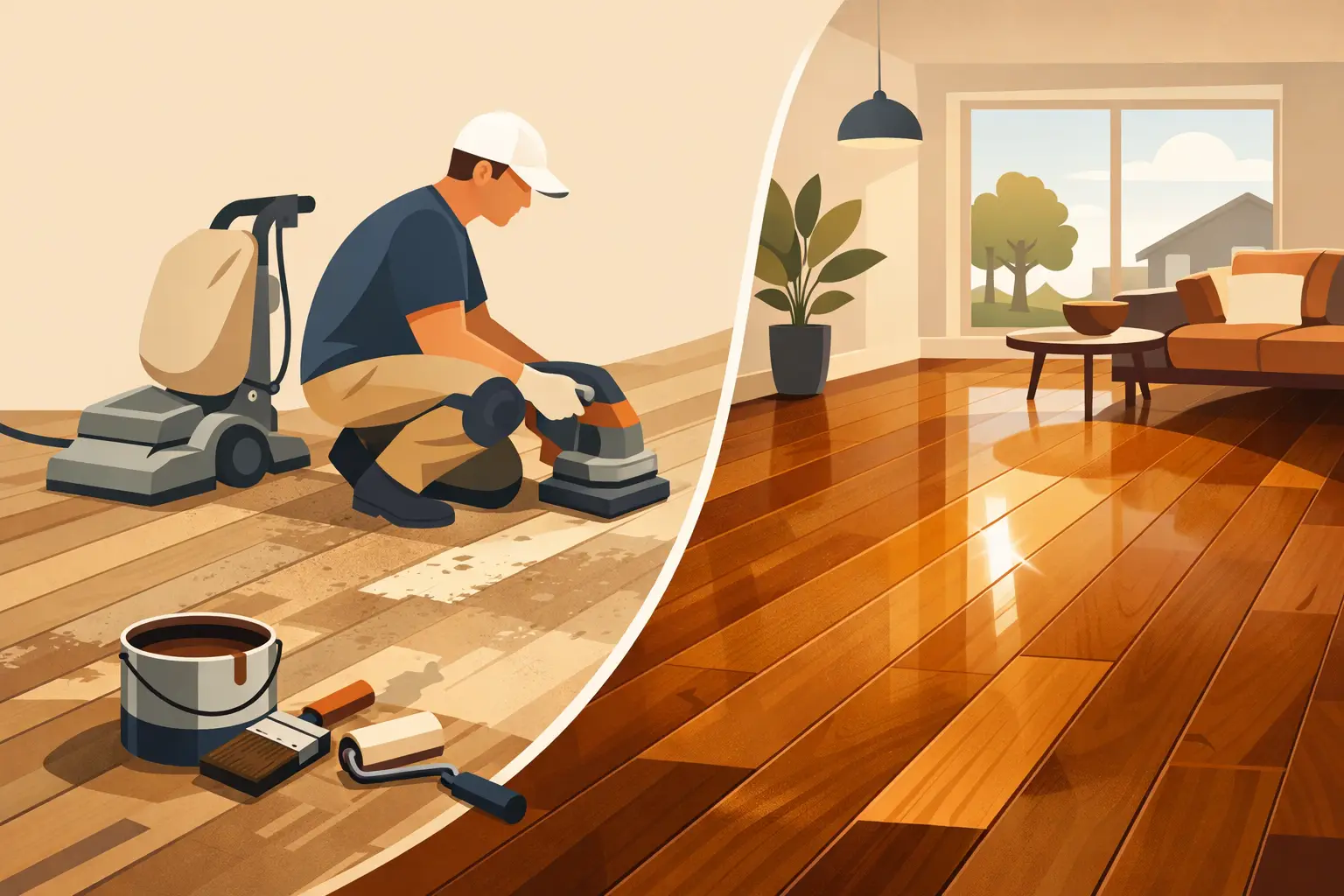
Solid hardwood floors are built to be renewed. Oak, maple and other solid wood boards can often be sanded several times over their lifetime, provided previous work has not removed too much material. That makes refinishing a practical option for homes with worn finishes, light staining, colour changes or widespread surface scratching.
A proper assessment matters because not every floor should receive the same treatment. Some floors need a full sand and refinish, while others may only need a screen and recoat. A screen and recoat lightly abrades an intact finish before a new protective coat is applied. It is faster and less invasive, but it will not remove deep scratches, dark water marks, uneven colour or damage that reaches the wood itself.
Full refinishing is usually the better route when boards are visibly worn through, old coatings are peeling, stains have penetrated the timber, or repairs need to blend into the surrounding floor. It is also the opportunity to replace damaged boards, close minor gaps where appropriate and change the stain colour before the final finish is applied.
Engineered wood requires more caution. It has a real hardwood veneer over a layered core, but the wear layer may be too thin for aggressive sanding. Some engineered floors can be refinished once, and some cannot safely be sanded at all. A contractor should identify the product, inspect its condition and determine the available wear layer before promising a result.
What a professional refinishing process involves
The visible transformation is only the final stage. Reliable hardwood floor refinishing begins with preparation and a close inspection of the floor, subfloor and surrounding conditions. In the Bay Area, this can include checking for moisture concerns near concrete slabs, exterior doors, kitchens and older plumbing lines. Moisture can cause cupping, crowning, staining and finish failure. Sanding a floor without addressing an active moisture source simply delays the next problem.
Furniture is removed, the work area is prepared and loose or damaged boards are assessed. Protruding nails, failed repairs and sections affected by water or termites may need attention before sanding starts. This is where specialist experience has real value: a patch should be secure, level and selected to blend as naturally as possible with the existing species and grain.
Sanding is carried out in stages, beginning with abrasives strong enough to remove the old coating and flatten wear, then progressing to finer grits that prepare the wood for stain or finish. Skilled sanding protects the integrity of the boards while avoiding common problems such as drum marks, uneven edges, rounded board detail and visible swirls in sunlight.
Dust-controlled equipment helps contain airborne sanding dust, although no active construction project is entirely dust-free. Homeowners should still plan for access restrictions, noise and temporary disruption. Good preparation makes the job more manageable, particularly in occupied homes where rooms are completed in phases.
Once the floor is smooth and thoroughly cleaned, stain can be applied if a colour change is desired. Natural finishes remain popular because they preserve the character of oak and other species, while lighter stains can reduce the heavy yellow or red cast of older finishes. Dark stains can look dramatic, but they tend to show dust, scratches and pet hair more readily. The best choice depends on light levels, furniture, maintenance expectations and the look of adjoining rooms.
The final protective coats are what allow the floor to perform day after day. High-quality water-based finishes often offer lower odour, clearer colour and quicker drying times. Oil-based finishes can provide a warmer amber tone and may suit certain traditional looks, but they generally take longer to cure and can deepen in colour over time. There is no universally best finish - there is a finish that best matches the floor, the household and the desired appearance.
Repair first, then restore the finish
Refinishing cannot correct every flooring problem on its own. Deep pet stains, black water marks, termite damage and badly cupped boards may require board replacement or targeted repairs before the sanding process begins. Trying to sand away severe damage can thin the surrounding wood unnecessarily and leave an uneven result.
Cupping is a common example. It occurs when the underside of a board contains more moisture than the top, causing the edges to rise. The cause may be a leak, excessive humidity, a wet crawl space or moisture migrating through a slab. The floor must dry and stabilise before sanding. If it is sanded while still cupped, the board can later crown when moisture levels equalise.
Older floors may also have gaps, movement or previous repairs that do not match. Some seasonal movement is normal in real wood and should not be treated as a defect. However, a flooring specialist can distinguish normal expansion from loose boards, structural movement or subfloor issues that need correction before refinishing.
Choosing a finish for Bay Area living
The right finish is not only about sheen. Glossy floors reflect light beautifully but reveal footprints and small scratches quickly. Satin is often the practical middle ground for active households because it offers a refined appearance without highlighting every mark. Matte finishes have become increasingly popular in contemporary interiors, particularly where homeowners want a more natural, low-reflective look.
For homes with children, pets or regular entertaining, durability and cleanability are usually more valuable than a high-shine appearance. Entryways, kitchens and hallways may benefit from a finish system selected for heavier traffic. Area rugs and protective pads can then reduce wear without hiding the floor you have invested in restoring.
If you are preparing a property for sale, refinishing can also have a strong visual impact. Buyers often respond to clean, continuous wood flooring because it makes rooms feel larger, brighter and better maintained. A neutral stain and durable satin finish will generally appeal to more buyers than a highly personalised colour choice.
Why qualification matters on a sanding project
Floor sanding is not a job where the lowest quote necessarily represents the best value. Poor sanding can leave permanent chatter marks, thin a floor prematurely or expose board edges that should have remained intact. Inadequate preparation can cause finish adhesion problems, while an unsuitable coating may fail under normal household use.
Look for a contractor who can explain whether your floor is solid or engineered, identify repair requirements and discuss moisture risks before work begins. They should provide a clear scope covering preparation, sanding, staining if required, finishing and drying or cure expectations. A licensed hardwood flooring specialist using NWFA-certified processes brings a level of accountability that is especially important when working on older Bay Area homes and valuable original floors.
At National Floors, each project starts with an in-home assessment so the recommended approach reflects the wood, its condition and the practical needs of the property. That may mean a straightforward refinish, carefully matched repairs, stain testing or a conversation about whether replacement is the safer choice.
Protecting the result after refinishing
A newly finished floor needs time to cure, even when it feels dry enough to walk on. Follow the contractor's guidance on when to replace furniture, lay rugs and resume normal cleaning. Rushing this stage can leave impressions, scuffs or reduced finish performance.
Afterwards, use a cleaner approved for hardwood finishes, wipe spills promptly and avoid soaking the floor with water. Felt pads beneath furniture, mats at entrances and regular dry dusting make a noticeable difference. Avoid steam mops, abrasive powders and harsh all-purpose cleaners, which can dull or weaken the protective coating.
If your hardwood floors are scratched, faded or damaged, do not assume replacement is your only option. A professional assessment can show what the wood still has to offer and set a clear path towards a floor that looks right at home again.
