
The success of a hardwood floor repair depends on the type of damage, how far it extends, the availability of compatible replacement wood, and the condition of the floor beneath the damaged area.
A professional evaluation can help determine whether repair, refinishing, or full replacement is the most practical solution.
Common Types of Hardwood Floor Damage
Hardwood flooring may be damaged by plumbing leaks, pet accidents, appliances, furniture, construction work, insects, moisture, or normal aging.
Common repair concerns include: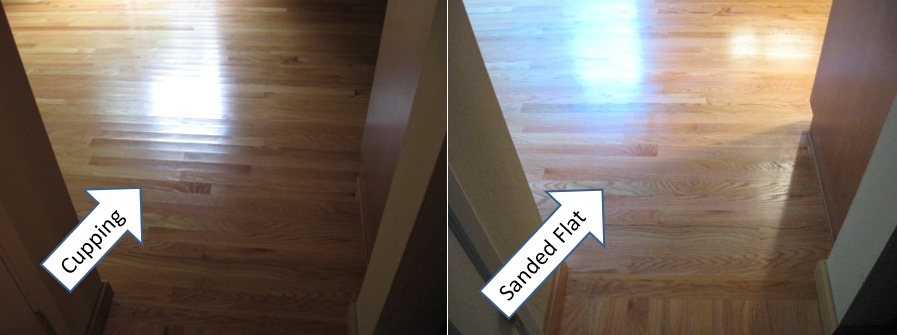
- Water-stained boards
- Cupped or crowned flooring
- Buckled boards
- Pet stains and odors
- Deep scratches and gouges
- Cracked or split boards
- Missing boards
- Loose flooring
- Excessive gaps
- Damaged areas around walls or cabinets
- Poorly completed previous repairs
- Termite or insect damage
Some damage affects only the surface finish, while other conditions extend into the wood or subfloor. Identifying the depth and cause of the problem is an important first step.
When Can Individual Boards Be Replaced?
Localized board replacement is often possible when the damage is limited to a manageable area and the surrounding floor remains stable.
A damaged board can be carefully removed and replaced with wood that matches the existing flooring as closely as possible. The repair may then be sanded, stained, and finished to blend with the surrounding area.
Matching involves more than finding a similar color. A successful repair should consider:
- Wood species
- Board width
- Board thickness
- Grain pattern
- Grade and character
- Direction of installation
- Age of the surrounding flooring
- Existing stain and finish
Older hardwood flooring may have dimensions or characteristics that are not commonly sold today. In some situations, compatible material must be sourced from another area, custom milled, or carefully selected from available flooring.
Can Water-Damaged Hardwood Floors Be Repaired?
Water damage is one of the most common reasons homeowners request hardwood floor repair. The outcome depends on the source of the water, how long the floor remained wet, and whether the subfloor was also affected.
Possible signs of water damage include:
- Dark or black staining
- Raised board edges
- Cupping
- Crowning
- Buckling
- Loose boards
- Soft or weakened wood
- Musty odors
- Movement when walking across the area
The water source must be corrected before flooring repairs begin. Installing new wood over an unresolved leak or excessive moisture can cause the replacement boards to fail.
Some floors that appear badly distorted immediately after a leak may improve as they dry. For that reason, moisture testing and an appropriate drying period may be necessary before deciding how much flooring must be replaced.
Boards that remain permanently distorted, deeply stained, structurally damaged, or contaminated may need removal. When the damage is localized, the affected boards can often be replaced without removing the entire floor.
Can Pet Stains and Odors Be Removed?
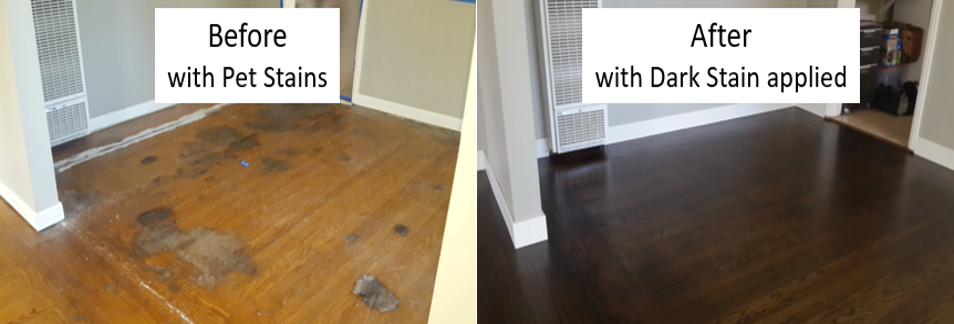
Pet accidents can range from light surface staining to deep contamination that reaches the wood and subfloor.
Light discoloration may sometimes improve during sanding. However, dark stains that have penetrated deeply into the wood may remain visible even after the surface is refinished.
Strong odors can also indicate that contamination has moved beneath the finish or between the boards. In more severe cases, affected flooring may need to be removed so the underlying area can be inspected, cleaned, sealed, or repaired.
Replacing a small section of flooring may provide a better and more predictable result than repeatedly sanding deeply stained boards.
What About Deep Scratches and Gouges?
The appropriate repair depends on how deeply the damage penetrates.
Surface scratches that remain within the finish may improve through recoating or refinishing. Deeper scratches and gouges may require filling, sanding, board repair, or individual board replacement.
A small isolated defect should not automatically lead to complete floor replacement. However, widespread damage across many rooms may make full refinishing more economical than numerous individual repairs.
Can Gaps Between Boards Be Repaired?
Some seasonal movement is normal in hardwood flooring. Wood contracts when indoor conditions become dry and expands as moisture levels rise.
Small gaps that appear during dry weather may close naturally when humidity increases. Permanently large or irregular gaps may point to installation problems, moisture imbalance, missing material, or movement within the floor.
Filling every seasonal gap is not always recommended because filler may crack or be pushed out as the flooring expands. The cause, size, location, and movement of the gaps should be evaluated before selecting a repair method.
Can Loose or Squeaky Boards Be Corrected?
Loose boards and squeaks can have several causes, including movement between the flooring and subfloor, loose fasteners, subfloor deflection, or friction between neighboring boards.
Some problems can be improved by securing accessible flooring. Others may require access from beneath the floor or removal of affected boards.
Because the sound may travel, the location where a squeak is heard is not always the exact source of the movement.
Why Repairs Are Often Completed Before Refinishing
Repair work is normally completed before the final sanding and refinishing process. This allows replacement boards and repaired areas to be sanded level with the surrounding floor.
The full floor can then be stained and finished together, producing a more consistent appearance than attempting to finish a replacement board separately.
Even with careful matching, new wood may initially look somewhat different from older flooring because of age, oxidation, grain, and sunlight exposure. Skilled preparation and finishing can reduce the contrast, although an absolutely invisible repair cannot always be guaranteed.
When Is Replacement the Better Option?
Repair may not be the most practical choice when:
- Damage affects a large percentage of the floor
- The subfloor has extensive deterioration
- The flooring is too thin for additional work
- Compatible replacement material cannot be obtained
- The floor has widespread structural movement
- Previous repairs have seriously compromised the installation
- Moisture problems remain unresolved
A reputable flooring contractor should explain why a repair is or is not recommended rather than automatically proposing complete replacement.
Have Your Damaged Hardwood Floor Professionally Evaluated
Many floors that look severely damaged can still be saved through targeted board replacement, repairs, and professional refinishing. The best decision depends on understanding what caused the damage and how far it extends.
National Floors provides hardwood floor repair, board replacement, sanding, staining, and refinishing services throughout the Bay Area. Each damaged area is inspected individually to determine the most appropriate and cost-effective repair approach.
Contact National Floors to schedule an evaluation before assuming that your entire hardwood floor must be replaced.
